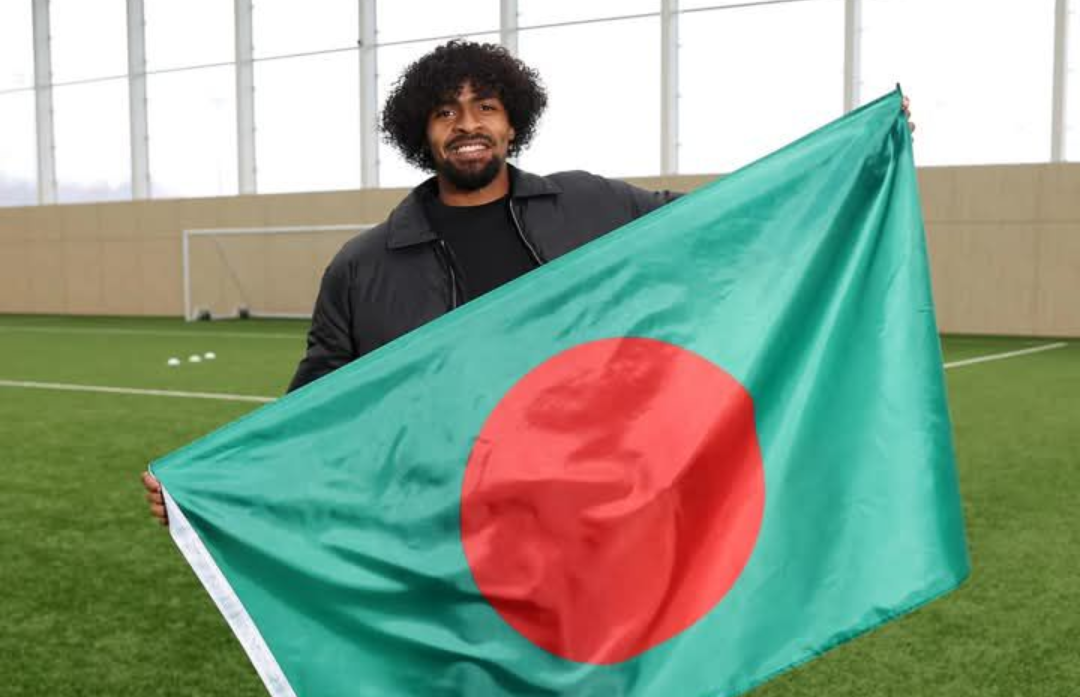






The All India Football Federation (AIFF) is actively working on a policy to integrate Overseas Citizens of India (OCI) players into the national team setup, aiming to address the long-standing struggle to find a top-quality players. AIFF President Kalyan Chaubey described the move as a potential “game-changer” for Indian football, which has heavily relied on veteran forward Sunil Chhetri for over a decade.
The 40-year-old Chhetri, who recently came out of retirement, scored in India’s 3-0 victory over the Maldives in a crucial AFC Asian Cup Qualifier buildup in Shillong. This marked India’s first win in 489 days, underscoring the team’s over-reliance on the legendary striker.
Speaking on the sidelines of the Khelo India Para Games 2025 in New Delhi, Chaubey emphasized the need for a long-term plan to develop Indian forwards. “We are making efforts to create a policy framework that allows us to utilize the talent of overseas Indian-origin (OCI) players,” he said. “Many countries have already done this, and until we establish clear guidelines, our national team selection will continue to follow existing rules. However, we must recognize that integrating these players could be a game-changer for Indian football.”
Chaubey highlighted the challenges faced by Indian strikers, noting that most clubs prefer foreign players in key attacking roles, which limits opportunities for local talent. “At present, we are depending on a single player like Sunil Chhetri in crucial moments. The question remains—who will take his place? We need a long-term plan to develop Indian strikers, especially for the No. 9 and No. 10 positions,” he added.
The AIFF’s push to include OCI players aligns with FIFA regulations, which allow players to represent a country if they hold a permanent international passport of that nation. However, India’s stance on dual citizenship poses a significant hurdle. Unlike countries such as South Africa, the United Kingdom, and the United States, India does not recognize dual citizenship. This means OCI players must renounce their current citizenship and obtain Indian citizenship to be eligible for national team selection.
In 2013, Izumi Arata, a Japanese-origin player, gave up his Japanese passport to play for India. Former India head coach Igor Stimac has also been a vocal advocate for integrating OCI players, particularly those competing in top leagues worldwide, to strengthen the national team.
Chaubey praised Chhetri’s enduring contributions to Indian football, calling him an “inspiration for millions and a true leader on and off the field.” However, he stressed the urgency of finding a successor to the iconic striker. “Sunil Chhetri’s dedication and commitment have set a benchmark for future generations. We are incredibly proud of everything he has achieved, but we must now focus on building a sustainable future for Indian football,” he said.
As the AIFF works on finalizing the policy, the move to include OCI players could mark a significant step forward in addressing India’s player crisis and elevating the national team’s competitiveness on the global stage.
AIFF Explores OCI Player Integration to Address India’s Football Crisis