





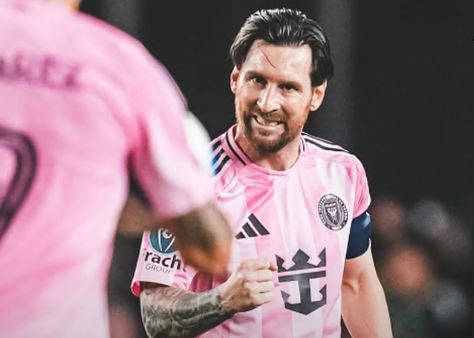
MIAMI, FL — The global football world is grappling with a stark reality following Lionel Messi’s contract extension with Inter Miami through 2028: one of the greatest talents in the sport’s history is committing his final professional years to Major League Soccer, a competition still widely viewed by critics as falling into the “amateur” or “semi-professional” category.
While Inter Miami and MLS celebrated the renewal as a landmark moment that secures the league’s elevated global profile, the decision has reignited a contentious debate over whether Messi’s unparalleled skill is being squandered in a competition that lacks the unrelenting intensity and elite quality of Europe’s top divisions.
The Quality Compromise
For traditionalists, the news is a source of disappointment. “It is a great drawback, such a great talent playing in MLS, which we should see as amateur football,” remarked on a popular international sports broadcast. This sentiment reflects a persistent view that the MLS’s unique structure—including salary caps, a lack of promotion/relegation, and a long history of attracting aging European stars—inherently compromises the competitive standard.
Though MLS attendance figures and physical metrics (like high-speed running counts) are demonstrably improving and in some cases surpassing mid-tier European leagues, the gap in technical and tactical rigor compared to the Premier League, La Liga, or the Champions League remains vast.
“Every week, he is facing defenses that simply aren’t at the level he played against for two decades,” noted a former European manager. “His greatness is undeniable, but the context does not challenge him in the same way. It’s football, but not the pinnacle of the sport.”
The MLS Counter-Argument: Exposure vs. Elite Play
On the other side of the Atlantic, the league and its proponents argue that the “Messi Effect” justifies the entire venture.
* Global Reach: Messi’s presence has transformed MLS from a regional league into a global spectacle, boosting viewership on Apple TV’s MLS Season Pass worldwide.
* Economic Engine: The star’s arrival has fueled an unprecedented economic boom, with massive spikes in attendance, merchandise sales, and corporate sponsorships. His contract extension through 2028 ensures he will inaugurate the new Miami Freedom Park stadium, cementing his financial value to the ownership group.
* Youth Inspiration: The league argues that having a player of Messi’s caliber in America will inspire a new generation of talent more effectively than watching him abroad.
Inter Miami Co-Owner David Beckham, upon announcing the extension, highlighted Messi’s commitment to the city and the club’s long-term project. However, for many purists, economic growth and global visibility are secondary to the purity of elite competition, leaving a lingering question: Should a generational talent be prioritized for maximum global exposure, or maximum competitive challenge?
With the extension signed, the world will now watch three more seasons of the little maestro’s magic—in a league where, for better or worse, his presence often overshadows the competition itself.