




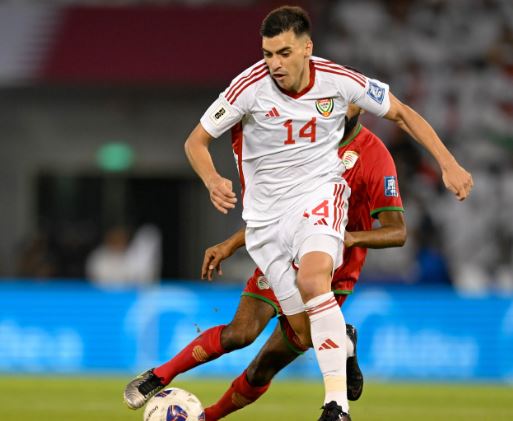
Naturalized Players in UAE Squad Stir Debate Across the Arab Football Community
Dubai, UAE — The UAE national football team’s growing reliance on naturalized players has sparked a nuanced conversation across the Arab world. While the move has been largely accepted—if not quietly supported—within the Emirates, football circles in the wider Arab region have reacted with mixed emotions, questioning the long-term implications for national identity and homegrown talent.
A Pragmatic Move, Not a Controversy at Home
Inside the UAE, public reaction has been relatively measured. Many Emiratis see the inclusion of naturalized players—mainly long-time residents who have contributed to the UAE Pro League for years—as a strategic step toward international competitiveness rather than a betrayal of national principles.
“It’s not about where a player was born; it’s about what he brings to the team,” said a UAE football supporter from Dubai. “If they’ve lived here, played here, and made the UAE their home, then they deserve to represent it.”
Sports officials share that sentiment, framing the policy as part of a long-term vision to close the competitive gap with Asia’s top football nations.
“Modern football demands excellence,” a UAE federation official stated. “To qualify for the World Cup and face elite teams, we must utilize every resource—local and naturalized alike.”
Wider Arab Reactions: Fears of Identity Erosion
While the debate within the UAE remains largely pragmatic, reactions elsewhere in the Arab football community have been more critical.
Commentators and fans from neighboring countries have expressed concern that the UAE’s approach, if emulated widely, could undermine the essence of national representation in Arab football.
“It’s understandable that teams want to compete,” said an Egyptian football analyst on Al Kass TV. “But if every nation starts importing players, we risk losing the emotional connection fans feel when they see one of their own score for their flag.”
For decades, Arab national teams have symbolized cultural pride and unity, often relying on locally developed talent. The UAE’s decision to grant citizenship to several foreign-born professionals marks a shift that many observers fear could set a new, divisive precedent.
Changing Face of the UAE Squad
Based on public records and the starting lineup from the recent UAE vs. Oman match, several foreign-born players—now UAE citizens—featured prominently in the team. Most of them have spent many years in the UAE Pro League before earning eligibility to represent the country.
Naturalized Players in the Starting XI
| Player Name | Position | True Nationality / Country of Birth |
|---|---|---|
| Kouame Kouadio (Jersey #4) | Defender | Ivory Coast (Côte d’Ivoire) |
| Lucas Pimenta (Jersey #3) | Defender | Brazil |
| Ruben Filipe Amaral (Jersey #2) | Defender | Portugal |
| Fábio de Lima (Jersey #10) | Attacking Midfielder | Brazil |
| Marcus Meloni (Jersey #6) | Defender / Right-Back | Brazil |
Naturalized Players on the Bench
| Player Name | Position | True Nationality / Country of Birth |
|---|---|---|
| Caio Lucas (Jersey #18) | Forward / Winger | Brazil |
| Nicolás Giménez (Jersey #14) | Midfielder | Argentina |
Native Emirati Core
Other players, including Khalid Eissa, Majed Hassan, Abdulla Ramadan, and Yahya Al Ghassani, are native Emiratis or individuals with long-standing family roots in the country. They continue to form the emotional and cultural backbone of the national squad.
Balancing Progress and Identity
While some view the UAE’s approach as a reflection of global football realities, others in the Arab world see it as a step too far—a potential dilution of national identity in favor of short-term performance gains.
Inside the Emirates, however, the mood remains calm and forward-looking. Fans are more focused on qualification campaigns and performances on the pitch than on birthplace debates. The UAE Football Association continues to emphasize that these players, naturalized or not, represent the country’s future ambitions.
As one Emirati columnist wrote:
“National pride today is not just about where a player was born—but how far he can help the flag go.”